

Are your kitchen knives feeling dull and frustrating to use? A sharp knife makes cooking safer, faster, and more enjoyable.
You don’t need fancy tools or expensive services to bring your blades back to life. With just a whetstone and a little know-how, you can sharpen your kitchen knife right at home. In this guide, you’ll discover simple steps that anyone can follow to get a razor-sharp edge.
Keep reading, and you’ll soon slice through ingredients like a pro.
Choosing The Right Whetstone
Choosing the right whetstone is important for sharpening kitchen knives well. A good whetstone makes the process easier and gives a sharper edge. Understanding the types and grit levels helps pick the best stone. Preparing the stone before use also improves sharpening results.
Types Of Whetstones
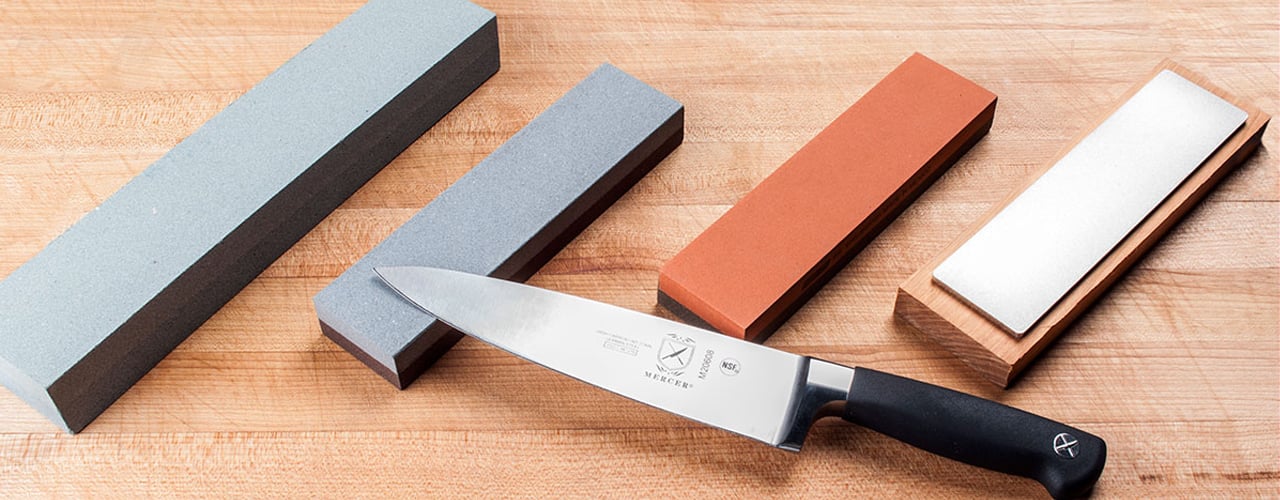
There are natural and synthetic whetstones. Natural stones come from quarries and have unique textures. Synthetic stones are made from man-made materials and offer consistent quality. Synthetic stones are often cheaper and more common for kitchen knives. Both types work well if chosen correctly.
Selecting Grit Levels
Grit level shows how rough or fine a whetstone is. Low grit stones, around 200 to 600, fix very dull or damaged blades. Medium grit stones, 800 to 1500, sharpen knives and fix small nicks. High grit stones, 3000 and above, polish and refine the blade edge. Pick grit based on your knife’s condition.
Preparing The Stone
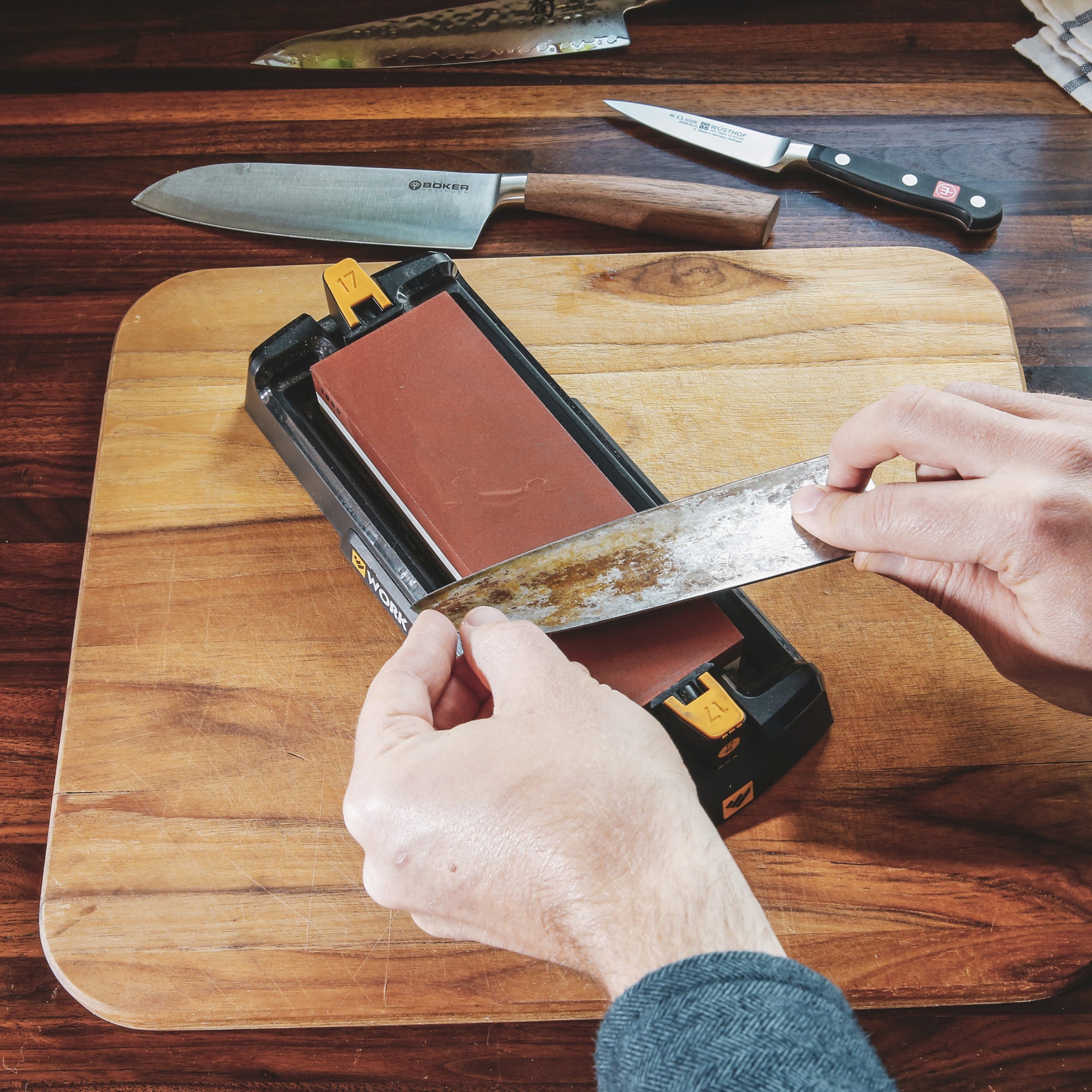
Most whetstones need soaking in water for 10 to 15 minutes. This helps the stone work better and stops it from clogging. Some stones just need a splash of water. Check the stone’s instructions. Wet the stone evenly before sharpening your knife.
Credit: worksharptools.com
Preparing Your Knife And Workspace
Preparing your knife and workspace is the first step to sharpening your kitchen knife with a whetstone. This step makes the process safer and more effective. A clean knife and a stable surface help you work with control and accuracy. Proper preparation also protects your tools and keeps your kitchen tidy.
Cleaning The Knife
Start by washing your knife with warm water and dish soap. Remove all food particles and grease. Dry the knife completely with a clean towel. A clean blade sharpens better and prevents slipping during sharpening. Avoid sharpening a wet or dirty knife to keep the whetstone in good condition.
Setting Up A Stable Surface
Find a flat, sturdy surface for your sharpening session. A kitchen counter or a large table works well. Place a damp cloth or rubber mat under the whetstone to stop it from moving. Stability is key to maintain the correct angle and pressure. This setup protects you and helps achieve a sharp, even edge.
Sharpening Techniques
Sharpening a kitchen knife with a whetstone needs the right technique. It affects how sharp and safe the blade becomes. Using correct methods helps keep your knife sharp longer.
Focus on the angle, strokes, and consistency. These three parts work together to create a smooth, sharp edge. Let’s explore each step in detail.
Correct Angle For Sharpening
Hold the knife at a steady angle against the whetstone. Usually, this angle is between 15 and 20 degrees. The exact angle depends on the knife type. Too steep or too flat will dull the blade fast. Keep your wrist steady to maintain the angle during sharpening.
Stroke Methods
Move the knife in smooth, even strokes across the whetstone. Start from the base of the blade and slide to the tip. Use light to moderate pressure for each stroke. Avoid rushing; slow and steady strokes give better results. Repeat the motion on both sides of the blade equally.
Maintaining Consistency
Consistency is key to a sharp edge. Keep the angle and stroke speed the same every time. Count your strokes to ensure balance on both sides. Check the blade edge regularly to see progress. Practice will help develop a steady hand and rhythm.
:max_bytes(150000):strip_icc()/__opt__aboutcom__coeus__resources__content_migration__serious_eats__seriouseats.com__2010__04__20200220-knife-sharpening-whetstone-vicky-wasik-5c825782502c4a429c08d0039d1df051.jpg)
Credit: www.seriouseats.com
Polishing And Honing The Edge
Polishing and honing the edge of your kitchen knife is key for a sharp, smooth blade. It refines the cutting edge and removes tiny burrs left after sharpening. This step makes the knife safer and easier to use. Careful polishing and honing extend the life of the blade and keep it cutting cleanly.
Using Fine Grit Stones
Fine grit whetstones polish the blade’s edge with precision. After using coarse stones, switch to fine grit for a smooth finish. Gently slide the knife across the stone at a low angle. This smooths out rough spots and sharpens the edge further. Fine stones help create a razor-sharp edge that lasts longer.
Honing Rod Benefits
A honing rod straightens the knife’s edge without removing much metal. Use it regularly to keep the blade aligned between sharpenings. Hold the rod vertically and draw the knife down at a 15-degree angle. Honing keeps the edge sharp and ready for quick cutting tasks. It is an easy way to maintain your knife daily.
Safety Tips And Maintenance
Sharpening a kitchen knife with a whetstone requires care and attention. Safety and maintenance keep you safe and your tools effective. Follow simple tips to handle knives and whetstones properly. Proper care extends the life of your sharp knives and stones.
Handling Sharp Knives Safely
Always hold the knife firmly by the handle. Keep fingers away from the blade edge. Cut on a stable surface to avoid slips. Store knives with blade guards or in a knife block. Never leave knives loose in drawers. Focus fully when sharpening or using sharp knives.
Cleaning And Storing The Whetstone
Rinse the whetstone with water after each use. Avoid using soap or harsh chemicals on the stone. Let the whetstone dry completely in a cool, dry place. Store the stone flat to prevent cracks. Check for wear regularly and replace if damaged. Proper cleaning keeps the stone effective and safe.
Regular Knife Care
Wipe knives clean after every use to prevent rust. Dry knives immediately to avoid moisture damage. Hone the blade with a honing rod between sharpenings. Avoid cutting hard materials that can chip the blade. Regular maintenance keeps knives sharp and safe. Proper care reduces the need for frequent sharpening.
Credit: www.webstaurantstore.com
Frequently Asked Questions
How Often Should I Sharpen My Kitchen Knife With A Whetstone?
Sharpen your kitchen knife every 1 to 3 months, depending on use. Frequent cooking may need more regular sharpening. A dull knife is unsafe and less effective.
What Grit Whetstone Is Best For Sharpening Kitchen Knives?
Use a 1000 grit stone for regular sharpening and a 6000 grit for polishing. Start with coarse grit if the blade is very dull. This combo keeps knives sharp and smooth.
Can I Damage My Knife Using A Whetstone Incorrectly?
Yes, improper angle or pressure can harm the blade edge. Keep a steady 15-20 degree angle and use light, even strokes. Practice helps prevent mistakes and keeps knives safe.
Conclusion
Sharpening a kitchen knife with a whetstone takes practice and patience. Start with the coarse side, then move to the fine side. Keep the angle steady and use smooth, even strokes. Regular sharpening keeps your knife safe and cuts better.
A sharp knife makes cooking easier and more enjoyable. Try it yourself and see the difference. You will feel proud using a well-sharpened knife every day. Simple tools, simple steps, great results.